


Bonk Bonk Tribe
37GAMES
I approached Bonk Bonk Tribe as a game for people who want a light, character-driven simulation experience rather than a demanding action title. Its unusual “Bonk Bonk Tribe” identity is immediately more playful than serious, while the “A Transcendent Journey” summary suggests a broader adventure around the tribe instead of a narrowly defined puzzle or racing loop. After spending time with it, my main advice is simple: choose it if you enjoy checking in on a stylized world and making gradual progress, but do not pick it expecting the depth of a large management simulator or the constant intensity of a competitive game.
The game comes from 37GAMES and sits in the simulation category. It is free to download, with optional purchases ranging from $0.99 to $99.99 per item. That combination makes the first decision less about the download itself and more about your preferred relationship with progression: you can begin without paying, but you should be comfortable seeing purchase options as part of the surrounding experience. I also found it best suited to short, repeat visits rather than one long uninterrupted session.
What to consider before choosing Bonk Bonk Tribe
The right kind of simulation player
When I compare a simulation game with its usual alternatives, I first ask what kind of control it offers. Some simulations are built around detailed planning, where every resource, schedule, and placement matters. Others are closer to relaxing collection games, using a friendly setting and repeated tasks to create a reason to return. Bonk Bonk Tribe feels more appropriate for the second group. Its appeal comes from the tribe theme, the sense of an ongoing journey, and the satisfaction of gradually seeing a small world develop through regular attention.
That distinction matters because the store category alone can create the wrong expectation. Someone searching for a serious city builder may want complex layouts, long-term economic balancing, and a wide range of systems that interact in unpredictable ways. Someone looking for a calm mobile routine may value clear goals, approachable presentation, and progress that can be handled between other activities. I would place this game much closer to the latter audience.
My practical test is whether you enjoy a game that can become part of your daily rhythm. A useful session might happen while waiting for a train, during a coffee break, or at home when you want something more engaging than scrolling but less demanding than a full console game. I would not make it my first recommendation for a player who needs a strong story delivered in a single sitting, or for someone who wants every decision to have a dramatic and permanent consequence.
Related News

Threads in Real Life: Who Should Join, Lurk, or Leave

How SHEIN Turned Shopping Into an Endless Content Feed

How to Make Fortnite Feel Smarter on Mobile

Should You Switch to Microsoft Outlook on Mobile?

Why Gallery Keeps Pulling Users Back

X Review: Why Its Network Still Matters
How the free model changes the decision
The free entry point is helpful because it lets you judge the tone and progression before spending anything. I recommend treating the first part as an evaluation period rather than assuming that every available option must be unlocked immediately. Notice how much you enjoy the basic loop, how often the game invites you back, and whether its pace feels satisfying without purchases.
The optional spending range is wide enough that different players will experience the economy differently. A careful player can keep the game as a no-cost pastime, while a highly engaged player may be tempted by several small purchases or a much larger bundle. My advice is to decide your personal limit before you become invested in the tribe. That is especially useful in simulation games, where the desire to speed up a routine can feel more persuasive after you have already built momentum.
I also recommend checking the purchase confirmation each time rather than tapping quickly through a familiar-looking screen. This is not a criticism unique to this game; it is simply good practice for any free mobile title with optional items. The best way to keep Bonk Bonk Tribe relaxing is to make sure spending remains a deliberate choice instead of a response to impatience.
Gallery
Device and audience fit
The game requires Android 6.0 or later, so it remains accessible to many older Android devices. That does not guarantee identical performance on every phone, but it does make the minimum software requirement less restrictive than many newer releases. I would still leave some storage space available and close demanding apps if your phone is older, particularly if you notice slow transitions or heat during longer sessions.
The age guidance is Everyone 10+, which makes it a reasonable option for older children and families who want a fantasy-themed simulation game. I would nevertheless look at the purchase settings before handing a device to a child. The age label and the presence of optional purchases answer different questions: one concerns suitability, while the other concerns how the game can be used.
The game has reached over 500 thousand installs and holds a 4.4 average from around 16 thousand ratings, with roughly 260 written reviews. Those figures suggest that it has found a real audience, but they should not replace your own judgment about the style of play. A popular mobile game can still be a poor match if you dislike repeated check-ins, gradual advancement, or a store-supported progression model.
What I found most appealing
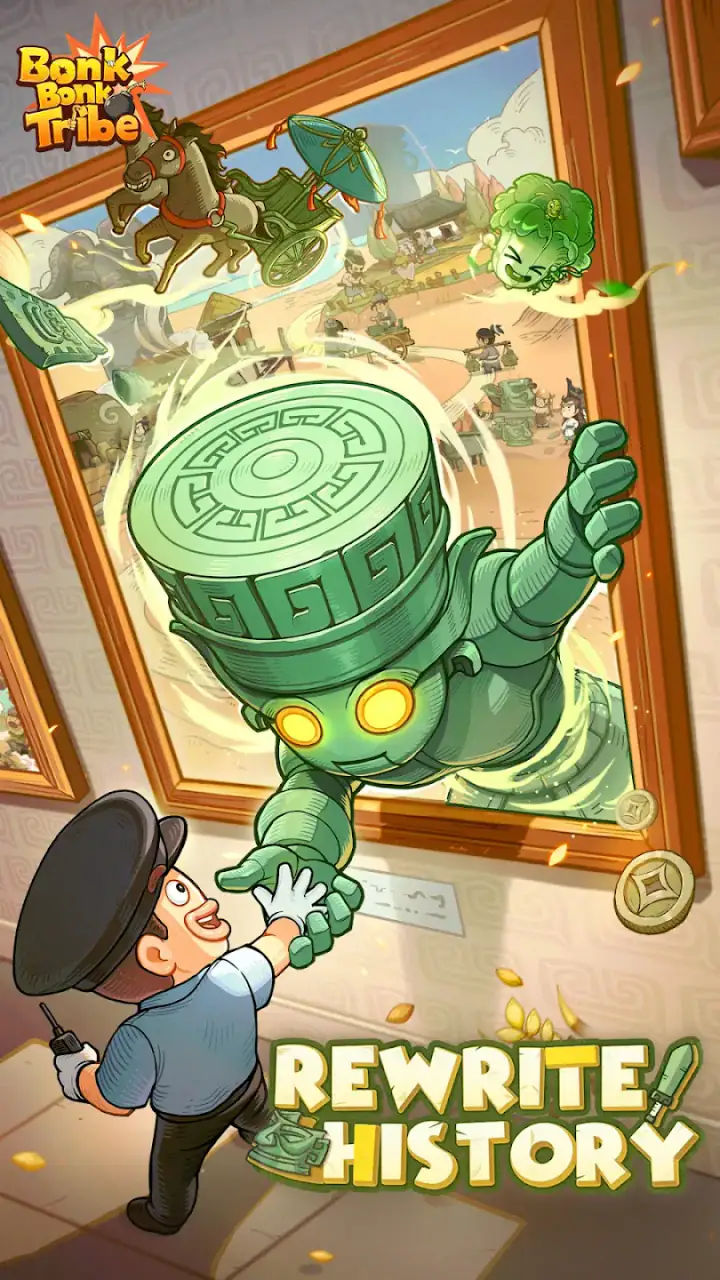
The strongest part of Bonk Bonk Tribe is its clear identity. The name is memorable, and the tribal setting gives the experience a warmer personality than a generic collection of menus and timers. Even when I was only making modest progress, the setting helped the routine feel like a visit to a particular place rather than another anonymous mobile task list.
I also liked that the game is easy to imagine in small pieces. You do not need to reserve an entire evening for it. A short visit can be enough to review what is happening, make a few choices, and leave with the feeling that the journey is moving forward. That makes it a useful companion for players who enjoy games in the gaps of the day.
The real strength is its low-pressure sense of return. I would describe it as a game that rewards consistency more than dramatic bursts of skill. If you like opening a title, taking care of a few priorities, and coming back later with a clearer sense of progress, its structure is easier to appreciate than it may be from the short store description.
Three habits that make the experience better
My first useful habit is to decide what kind of session you are having before opening the game. If I have only a few minutes, I focus on the most immediate tasks and avoid wandering through every available option. If I have more time, I use the visit to review the broader state of the tribe and think about the next step. This prevents a small mobile game from turning into an unfocused sequence of taps.
Second, I would avoid spending simply because an option is available. Let the normal pace show you which parts you genuinely enjoy. If a purchase removes a delay but also removes the small satisfaction of returning later, it may not improve your experience. In a simulation, waiting can sometimes be part of the rhythm, not merely an obstacle.
Third, I suggest keeping your early choices consistent with the type of player you are. If you prefer a relaxed routine, do not build your whole approach around rushing. If you enjoy optimization, pay attention to which actions produce meaningful progress instead of treating every button as equally valuable. This mindset is more useful than trying to imitate another player’s route, because the game’s value depends heavily on whether its pace fits your own habits.
Where another simulation may be a better fit
Bonk Bonk Tribe is not the universal answer for simulation fans. A traditional city-building game is likely a better choice if your enjoyment comes from designing layouts, balancing several connected resources, and watching a settlement respond to your planning. A farming-focused simulation may suit you more if you want a clearly recognizable work cycle, such as planting, harvesting, crafting, and expanding a homestead. A management game may be preferable if you want decisions to revolve around staff, schedules, finances, or operational efficiency.
Players who prefer direct control and immediate feedback may also be happier with an action game or a strategy title that resolves decisions on the spot. The tribe theme can make the game inviting, but a friendly setting does not automatically mean that the experience will satisfy someone who needs constant challenge. I would especially steer competitive players elsewhere if their main motivation is ranking against other people or mastering fast reactions.
There is also a difference between a game that accompanies your routine and one that demands your full attention. If you want a cinematic adventure with a fixed ending, Bonk Bonk Tribe may feel too open-ended or repetitive. If you want a completely offline-style pastime with no purchase prompts, a paid simulation may be a cleaner fit, even if its initial cost is higher. The better option depends on whether you value free access and ongoing visits more than a self-contained experience.
The cost of changing your mind
Because the game is free, trying it involves less financial risk than starting with a paid simulation. The larger cost is time: once you become attached to the tribe and its progress, moving to another game can mean leaving behind a routine you have built. I recommend making the comparison early. Play long enough to understand whether the basic rhythm suits you, but do not feel obliged to continue simply because you have already invested attention.
If you switch from a detailed simulator to this one, you may miss the feeling of constructing a system with many moving parts. If you switch from a fast game to this one, you may appreciate the calmer pace but wonder whether each visit offers enough variety. Conversely, if you are leaving a more complicated simulation, the lighter structure may be exactly what you need when you want less mental overhead.
My own approach would be to keep it alongside, rather than instead of, a deeper game. Use Bonk Bonk Tribe for brief check-ins and a more involved simulator when you want a longer planning session. That division gives each type of game a clear job and reduces the temptation to judge this title by standards it was not designed to meet.
Version, support, and everyday practicality
The current version is 2.5.5, and the game was released on September 11, 2025. Those details are useful when checking compatibility and deciding whether the experience is recent enough for your expectations. I would keep automatic updates enabled if possible, since mobile games can change their balance, menus, and daily rhythm over time.
In everyday use, I would play with notifications under control. Reminders can be helpful when they bring me back to a game I intentionally want to play, but too many interruptions can make a relaxing simulation feel like another obligation. If the game gives you notification choices, select only the ones that support your routine. If it does not, the phone’s own notification settings are worth reviewing.
I would also avoid judging the game from a single long session. Its appeal is easier to understand across several brief visits, because the central question is not whether it can hold your attention for hours at once. The better question is whether returning to the tribe feels pleasant rather than burdensome.
My recommendation for different players
I recommend Bonk Bonk Tribe to players who want a free simulation game with a distinctive tribe theme, a gentle ongoing journey, and room for short sessions. It is particularly suitable if you enjoy gradual progress, prefer a playful atmosphere, and are comfortable deciding for yourself whether optional purchases add value. The broad Android compatibility and Everyone 10+ guidance also make it an approachable choice for households looking for a casual game to try together, with purchase controls handled responsibly.
I would skip it if your priority is deep economic simulation, a tightly scripted story, competitive mastery, or a completely purchase-free environment. In those cases, a specialized alternative will probably respect your preferences better. I would also be cautious if you tend to spend impulsively in free games; set a boundary before the tribe becomes familiar.
For me, the deciding factor is not the promise of a huge feature list. It is the combination of personality and manageable pacing. Bonk Bonk Tribe works best when I treat it as a small recurring world, not as a replacement for every other kind of game. It earns a recommendation as a relaxed, accessible simulation experience, provided you want that kind of relationship with a mobile game and are willing to judge its free-to-play choices at your own pace.
FAQs for Bonk Bonk Tribe
What is Bonk Bonk Tribe, and what kind of game is it?
Bonk Bonk Tribe is a casual, action-focused game built around quick matches, simple controls, and playful combat. Players typically guide characters through short encounters while attacking opponents, avoiding hazards, and improving their performance. Its colorful presentation and straightforward gameplay make it accessible to beginners, although later stages may require better timing, positioning, and strategic use of available abilities.
Is Bonk Bonk Tribe free to download and play?
Bonk Bonk Tribe can generally be downloaded without an upfront purchase, but the exact monetization system may depend on the version available for your Android or iOS device. Some content may include optional in-app purchases, advertisements, cosmetic items, upgrades, or other conveniences. Before downloading, check the store listing and payment settings, especially if children will be using the device.
Does Bonk Bonk Tribe require an internet connection?
The connection requirements may vary according to the feature you are using. Basic gameplay could be available offline in some versions, while online events, account synchronization, advertisements, leaderboards, updates, or multiplayer functions may require an active internet connection. If you plan to play while traveling, open the game beforehand and test which modes remain accessible without Wi-Fi or mobile data.
Is Bonk Bonk Tribe suitable for children?
Bonk Bonk Tribe may be appropriate for players who enjoy lighthearted action, but parents should review the age rating and store description before installation. Consider the presence of cartoon combat, advertising, chat or social features, and optional purchases. It is also a good idea to enable parental controls and disable unrestricted payments if younger players will be using the application.
What should I check before installing Bonk Bonk Tribe?
Before installing Bonk Bonk Tribe, verify that your device meets the listed Android or iOS requirements and has enough free storage for the initial download and future updates. Review the app permissions, privacy policy, supported languages, and recent user feedback. You should also confirm whether progress is linked to an account, because uninstalling the game or changing devices may affect locally stored progress.
Pros
- Simple controls make it easy for new players to start quickly.
- Short matches suit quick gaming sessions on mobile devices.
- Bright visuals give the game a fun
- lighthearted atmosphere.
- Progression rewards encourage regular play and experimentation.
- The quirky theme helps it stand out from typical mobile games.
Cons
- Gameplay may become repetitive after extended sessions.
- Some upgrades or content may require considerable grinding.
- Small-screen controls can feel imprecise during hectic moments.
- Online features may depend heavily on connection quality.
- Ads or optional purchases could interrupt the overall experience.


